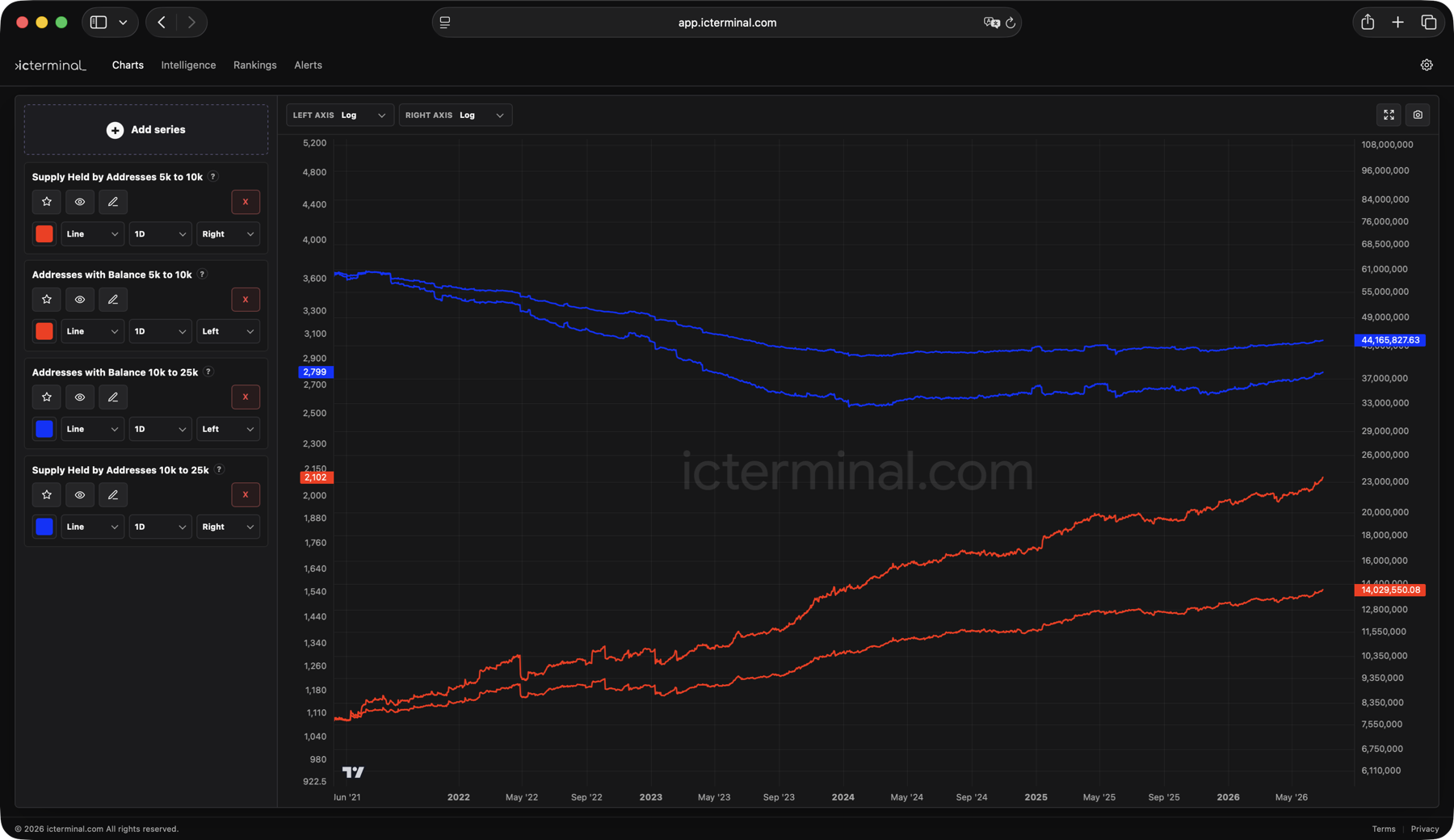
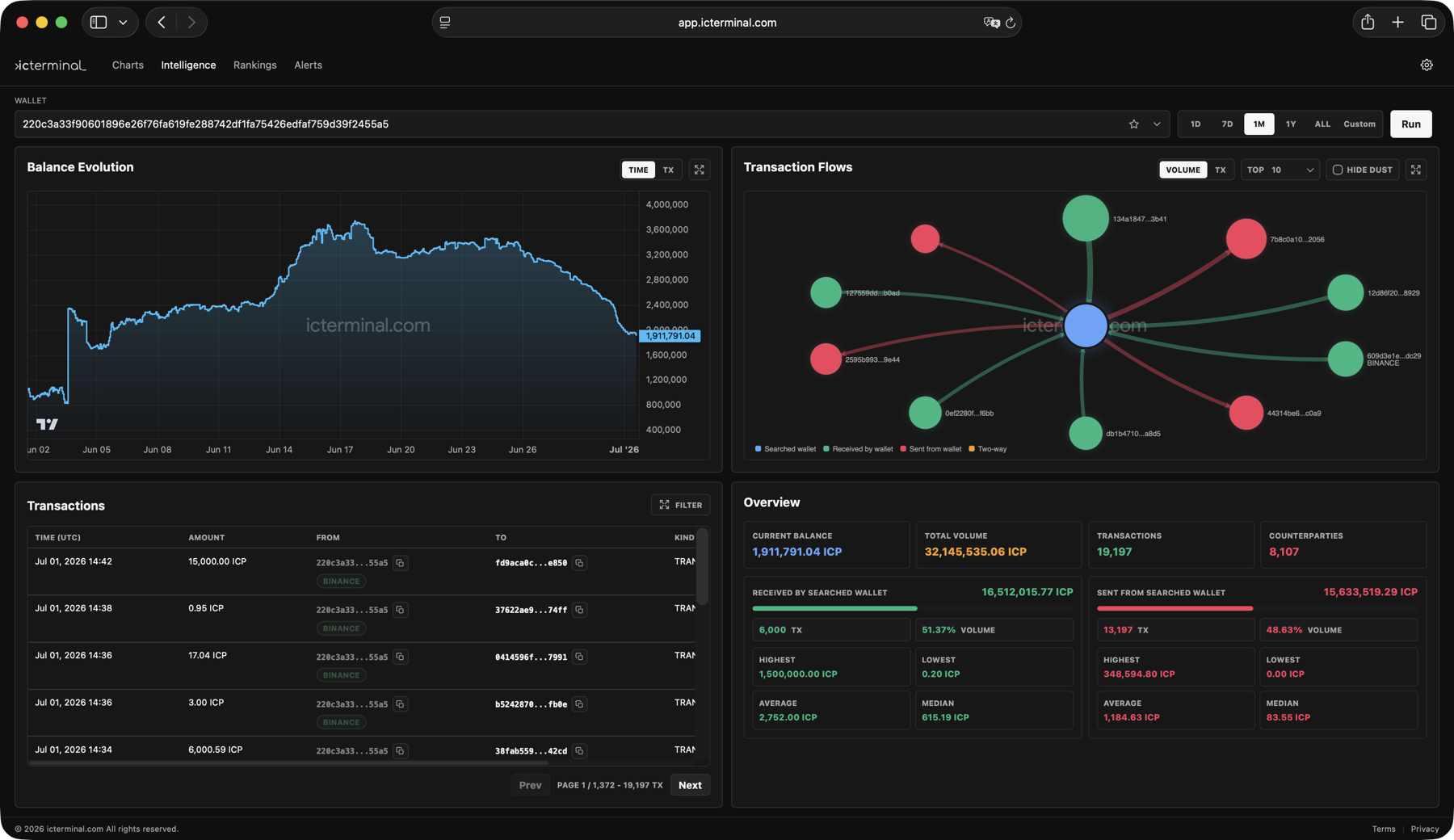
Number of Transactions


The Number of Transactions metric represents the total count of successful on-chain transactions executed on the ICP network during a selected period. Each transaction is counted individually, regardless of the participants involved or the value transferred. Failed or reverted transactions are excluded to ensure the metric accurately reflects completed network activity.

How it’s calculated

This metric is computed by scanning all validated blocks and summing the total number of confirmed transactions within the selected timeframe. Transactions include standard token transfers, staking or neuron-related movements and operations like mint or burn.. Each successful transaction contributes equally to the count, providing a measure of transactional throughput.

Interpretation of trends

The Number of Transactions provides insight into network usage intensity and activity patterns:

  • Increasing transactions: Suggest higher activity on the network, which may result from growing user engagement, increased interaction with the protocol, or periods of heightened speculative or economic activity.
  • Stable or flat transaction counts: Indicate consistent usage, where network activity remains steady without significant spikes or drops.
  • Declining transactions: Reflect periods of lower on-chain activity, which may occur during network consolidation, reduced participation, or temporary cooling in economic or speculative activity.

Monitoring this metric over time can reveal behavioral patterns in network engagement, including cyclical peaks, responses to ecosystem events, or the impact of upgrades and protocol changes. However, the sheer number of transactions does not capture transaction size, economic significance, or the number of unique participants involved.

Limitations

While the Number of Transactions is a valuable measure of network throughput, it has several limitations:

  • Equal weighting: Each transaction counts the same, regardless of value or complexity, meaning micro-transactions and large transfers are treated identically.
  • Automated activity: Bots, scripts, or canisters may generate high volumes of transactions, inflating the count without corresponding human activity.
  • No participant insight: The metric does not differentiate between repeated activity by the same addresses and broader participation across the network.
  • Temporal spikes: Short-term events like airdrops can create temporary surges, which may not reflect sustained activity.

Disclaimer: The information provided in the descriptions above is for informational and educational purposes only and is intended as a general overview of the referenced metrics. These descriptions are illustrative, descriptive, and non-exhaustive; additional interpretations, use cases, and limitations may exist that are not covered here. Nothing herein should be construed as financial, investment, legal, tax, or professional advice, nor should it be relied upon as the sole basis for any decision-making process. All users should conduct their own independent research, validate data through multiple sources, and consult with qualified professionals where appropriate. The content provided does not guarantee accuracy, completeness, or reliability, and no representation or warranty is made regarding its correctness. The metrics, interpretations, and examples mentioned are subject to change over time and may not reflect all possible scenarios or market conditions. By using this information, you acknowledge that you do so at your own discretion and responsibility. No advisory, fiduciary, or client relationship is created through the use or reading of this material.