Transfer to/from Exchange Addresses (Netflow) - Binance
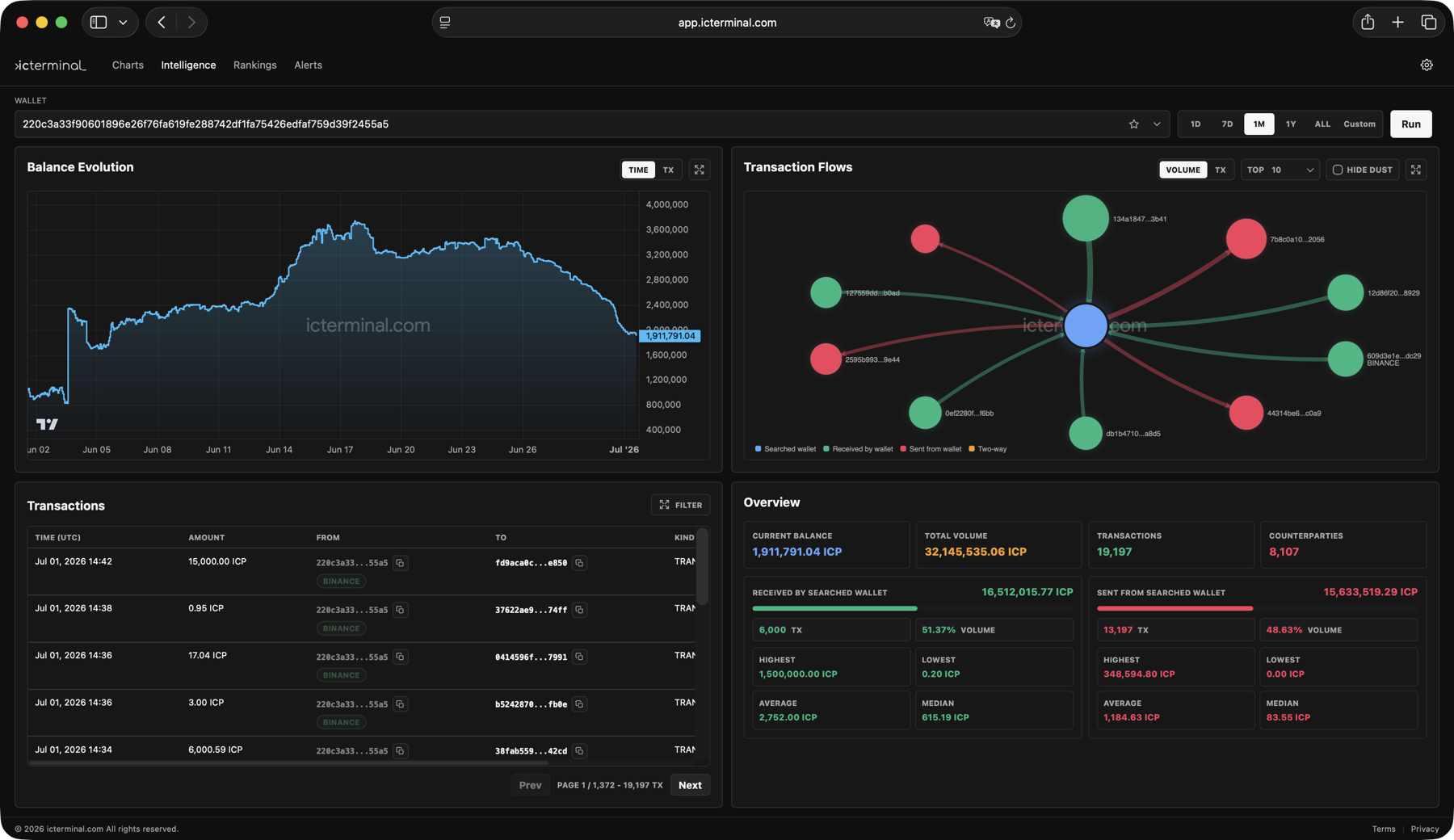
Transfer to/from Exchange Addresses (Netflow) – Binance measures the net amount of ICP moving into or out of all known Binance addresses, calculated as total inflows minus total outflows over a given period. This metric aggregates transactions using our continuously updated labeled dataset, with addresses identified through publicly available sources, official exchange disclosures, and internal research.
How it’s calculated
Netflow = Total Inflows − Total Outflows
Each transaction to or from a labeled Binance address is accounted for in the netflow calculation.
- Addresses are continuously verified and labeled, and netflow values are updated as new information becomes available.
- Values may fluctuate over time, particularly for recent snapshots, due to new labeling or newly discovered addresses.
What this metric highlights
- Positive Netflow indicates more ICP entering Binance than leaving, which may reflect higher deposit activity, increased liquidity, or potential selling pressure.
- Stable Netflow suggests inflows and outflows are roughly balanced, reflecting neutral exchange activity.
- Negative Netflow reflects more ICP leaving Binance than entering, potentially signaling off-exchange accumulation, long-term holding, or reduced available market supply.
Limitations
- Partial coverage: Not all Binance addresses are publicly known; some flows may be untracked.
- Dynamic and variable: Token movements can occur frequently, so netflow values are snapshots that may change as new addresses or transactions are labeled.
- Does not indicate intent: Transfers may reflect trading, staking, custody management, or other operational purposes.
- Informational purposes only: This metric is a proxy for Binance netflow activity, not a definitive measurement of market behavior or liquidity.
Disclaimer: The information provided in the descriptions above is for informational and educational purposes only and is intended as a general overview of the referenced metrics. These descriptions are illustrative, descriptive, and non-exhaustive; additional interpretations, use cases, and limitations may exist that are not covered here. Nothing herein should be construed as financial, investment, legal, tax, or professional advice, nor should it be relied upon as the sole basis for any decision-making process. All users should conduct their own independent research, validate data through multiple sources, and consult with qualified professionals where appropriate. The content provided does not guarantee accuracy, completeness, or reliability, and no representation or warranty is made regarding its correctness. The metrics, interpretations, and examples mentioned are subject to change over time and may not reflect all possible scenarios or market conditions. By using this information, you acknowledge that you do so at your own discretion and responsibility. No advisory, fiduciary, or client relationship is created through the use or reading of this material.