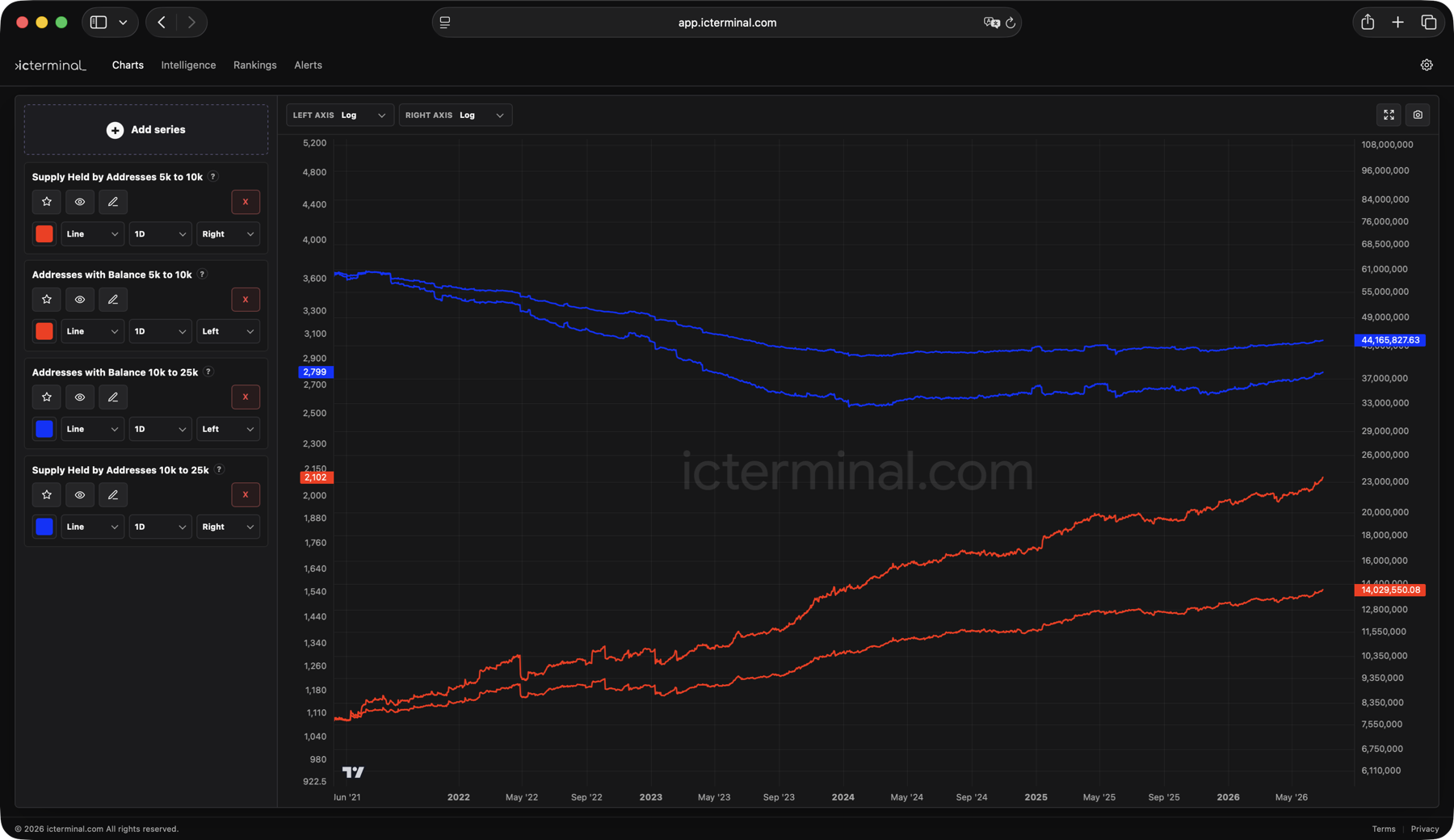
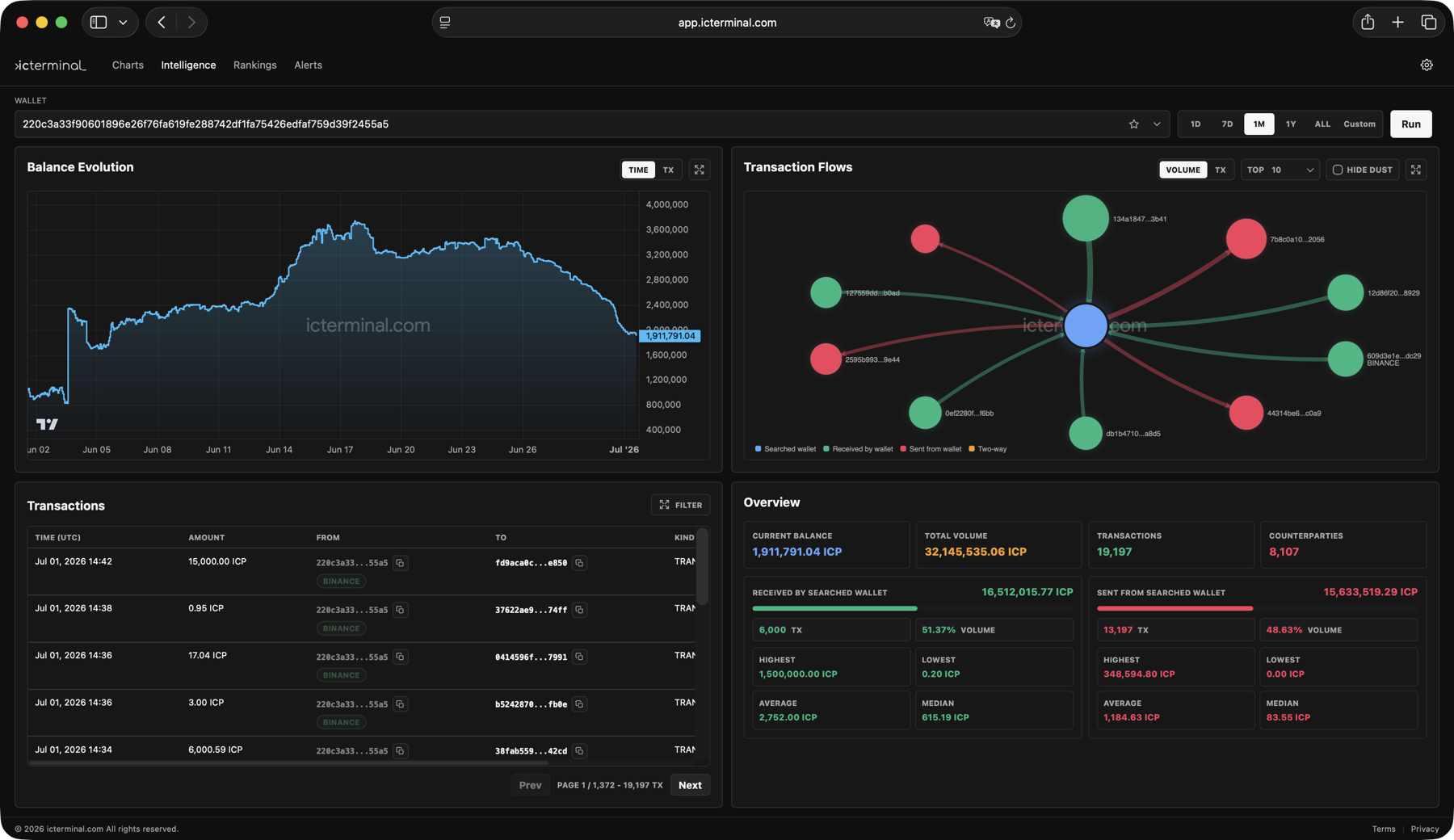
Number of Addresses Last Active 6-12M


Number of Addresses Last Active 6–12 Months measures the total number of ICP addresses that have conducted at least one successful transaction between six and twelve months ago. This tier provides a view of addresses that were active in the recent past but have not interacted on-chain in the last six months, offering insight into mid-term activity trends and partially dormant participants.

How it’s calculated

Addresses are analyzed based on the timestamp of their most recent successful transaction. If an address’s last activity occurred between six and twelve months ago, it is included in this metric. Each address is counted once per measurement period, regardless of transaction frequency or volume.

What this metric highlights

This metric helps illustrate the mid-term engagement and dormancy profile of the network:

  • Increasing number of addresses in this range: Could indicate that more addresses are becoming inactive over time, transitioning from the <6M tier, or that users are temporarily reducing on-chain activity.
  • Stable count: Suggests a consistent level of addresses that are neither fully active nor fully dormant, reflecting a balance in mid-term participation.
  • Decreasing count: May indicate addresses returning to activity within the last six months, migration to longer dormancy, or consolidation of wallets.

Limitations

When interpreting this metric, the following considerations are important:

  • No insight into balance or economic impact: All addresses are counted equally, whether they hold minimal ICP or significant amounts.
  • Identity and purpose are unknown: Addresses may belong to individuals, custodial entities, DAOs, exchanges, or automated systems.
  • Does not indicate intent or sentiment: Being in this range does not imply accumulation, exit, or strategic behavior—only recency of activity.

Disclaimer: The information provided in the descriptions above is for informational and educational purposes only and is intended as a general overview of the referenced metrics. These descriptions are illustrative, descriptive, and non-exhaustive; additional interpretations, use cases, and limitations may exist that are not covered here. Nothing herein should be construed as financial, investment, legal, tax, or professional advice, nor should it be relied upon as the sole basis for any decision-making process. All users should conduct their own independent research, validate data through multiple sources, and consult with qualified professionals where appropriate. The content provided does not guarantee accuracy, completeness, or reliability, and no representation or warranty is made regarding its correctness. The metrics, interpretations, and examples mentioned are subject to change over time and may not reflect all possible scenarios or market conditions. By using this information, you acknowledge that you do so at your own discretion and responsibility. No advisory, fiduciary, or client relationship is created through the use or reading of this material.